
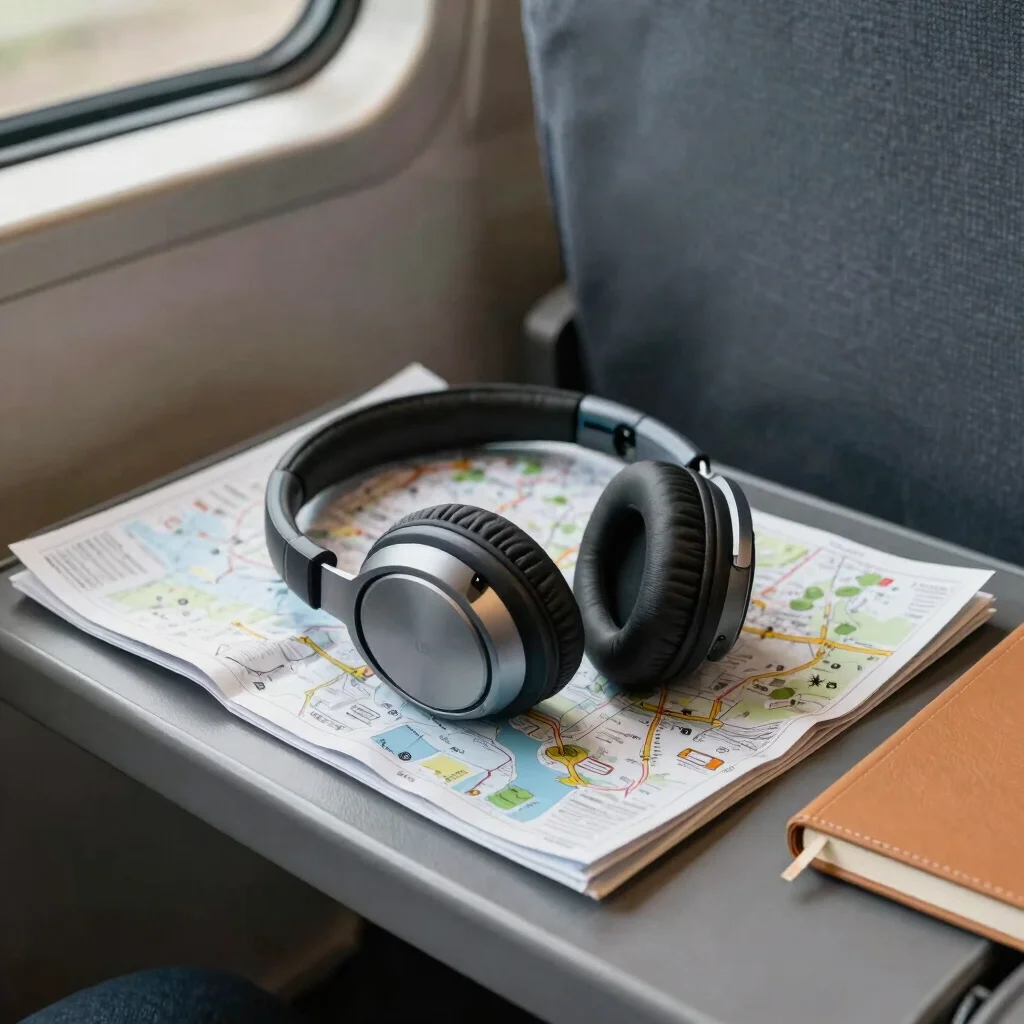
On a train, the low rumble can make a podcast hard to follow even when the volume is up. Active noise cancellation is designed to reduce some steady background sounds, but it is not a mute button for the world—and that distinction should shape what you pay for.
Match the feature to the noise
Active noise cancellation is often most useful against continuous, lower-pitched sounds such as cabin or ventilation hum. Sudden voices, clattering dishes, and a nearby conversation are more complicated; they may remain audible, especially when the headphones do not seal well.
Passive isolation comes from the physical fit: earcups that cover the ear or ear tips that seal the ear canal. That fit can reduce outside sound without an electronic cancellation mode, so compare the comfort and seal alongside the feature label.
Consider your actual routine
Frequent flyers and commuters may value cancellation because steady engine or road noise can dominate a long trip. At a shared desk, it may help with background hum, but a quiet room or a pair with a comfortable passive seal could be enough if interruptions are occasional.
For walking near traffic or waiting for transit, the ability to hear your surroundings matters. Check whether a model offers a transparency or ambient-sound mode, how it is activated, and whether you can adjust it without navigating a phone app.
Check the trade-offs
Noise cancellation can affect battery use, and some listeners notice pressure-like sensations or changes in sound when the mode is switched on. These experiences vary, so look for clear return terms and, when practical, try the headphones in the environment where you expect to use them.
Before choosing, compare fit, controls, battery behavior with cancellation enabled, and the quality of the ambient mode—not just the promise of a quieter commute. Affiliate links in Fob Advisor articles may earn us a commission; our guidance is based on explaining these trade-offs, not claiming every reader needs the feature.