The best car audio systems for everyday driving
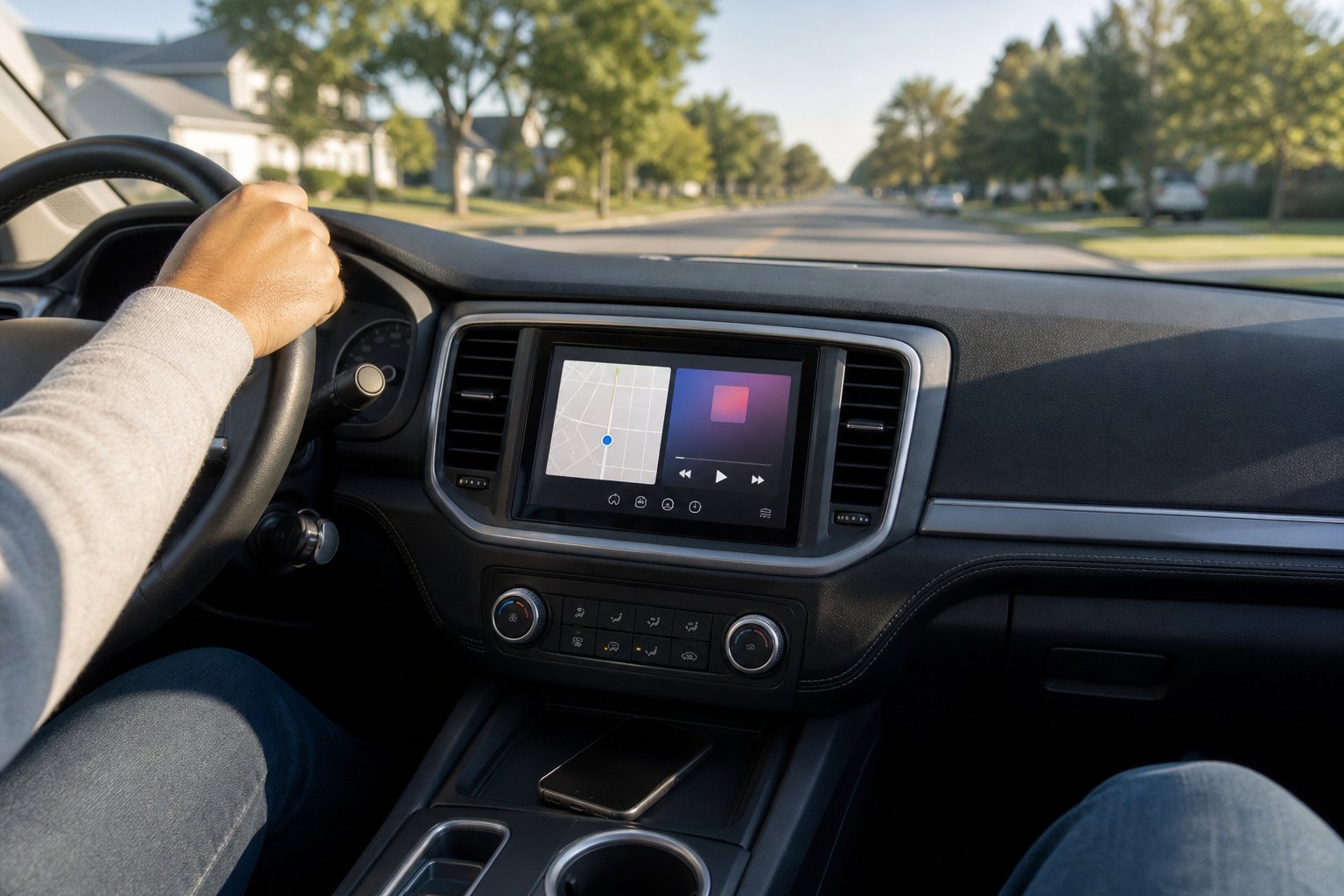
The best car audio systems for everyday driving make the drive you do every day easier and more enjoyable: your phone connects before you leave the driveway, calls and podcasts are easy to hear over road noise, and music sounds full at sensible volumes. That doesn't have to mean a big custom install. We picked nine upgrades, from a $20 Bluetooth adapter to a wireless CarPlay stereo and a seat-sized subwoofer, so you can choose the right level of change for your car and budget.
- Already have wired CarPlay? A wireless adapter like the Ottocast U2-AIR is the cheapest daily upgrade
- Pioneer's DMH-W3000NEX is our best new stereo for most commuters
- Kicker's Hideaway HS10 adds fuller sound without giving up any trunk space
Key takeaways
- Fix the daily annoyances first For most drivers, unplugging the phone and hearing calls clearly matter more than extra watts.
- Keep the factory stereo if it works Many newer cars only need a wireless adapter. Older cars can add Bluetooth for about $20.
- Quiet doors sound better Sound deadening cuts road noise, so music and calls are clearer at lower volume.
- Pick easy installs Every pick here plugs in or fits standard openings, with no custom fabrication.



Upgrades that keep your factory stereo
|
Wired CarPlay
Ottocast U2-AIR
|
Wired Android Auto
AAWireless TWO
|
No Bluetooth
Scosche BTFM9
|
|
|---|---|---|---|
|
|
|
|
|
| Your car needs | Factory wired CarPlay | Factory wired Android Auto | FM radio + 12V socket |
| Phones | iPhone | Android 11+ | iPhone and Android |
| Install | Plug into USB | Plug into USB | Plug into 12V socket |
| Our score | 9.0 /10 | 8.7 /10 | 8.3 /10 |
| Price | – | – | – |
| View | View | View |
New stereos compared
Speakers, bass and quieter doors
|
Best easy bass
Kicker Hideaway HS10
|
Best speakers
Kicker CS CSC65
|
Quietest ride
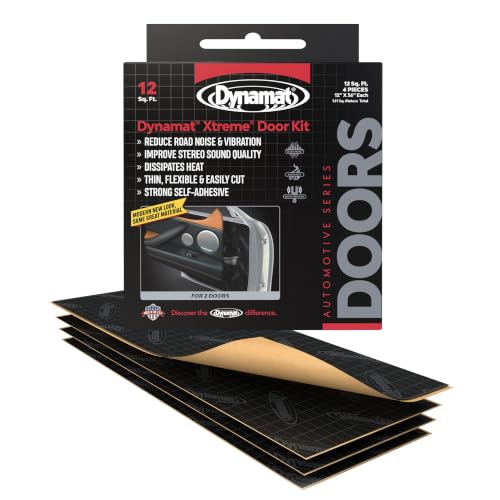
Dynamat Door Kit
|
|
|---|---|---|---|
|
|
|
|
|
| What it is | Powered 10 in sub | 6.5 in coaxials | Sound deadening |
| Key spec | 180 W RMS | 90 dB sensitivity | 12 sq ft, 2 doors |
| Works with factory stereo | Yes | Yes | Yes |
| Our score | 9.0 /10 | 8.8 /10 | 8.6 /10 |
| Price | – | – | – |
| View | View | View |
How we chose the best car audio systems for everyday driving
We did not bench-test this gear ourselves. We judged each pick on what matters on a daily drive, using the makers’ published specifications, dealer spec sheets and owner feedback. Every pick was sold on Amazon.com when we checked.
-
Daily convenience
Does your phone connect on its own? Are calls and voice commands easy? We favored wireless CarPlay and Android Auto and simple controls.
-
Clarity over road noise
Commuting means engine, tire and wind noise. We picked gear that keeps voices and music clear at normal volume.
-
Easy installation
Plug-in adapters, standard-size stereos and speakers, and subs that fit under a seat. Nothing needs custom fabrication.
-
Works with what you have
Where possible, picks work with your factory stereo, so you can upgrade without losing built-in features.
The best car audio systems for everyday driving: detailed reviews
We have grouped the picks by how much you want to change. Start at the top if your stereo works and you just want less hassle; move down for a new head unit, better speakers and fuller bass. If sound quality is your main goal, see our guide to the best car audio systems for sound quality.
Upgrades that keep your factory stereo
The cheapest big upgrade for cars with wired CarPlay
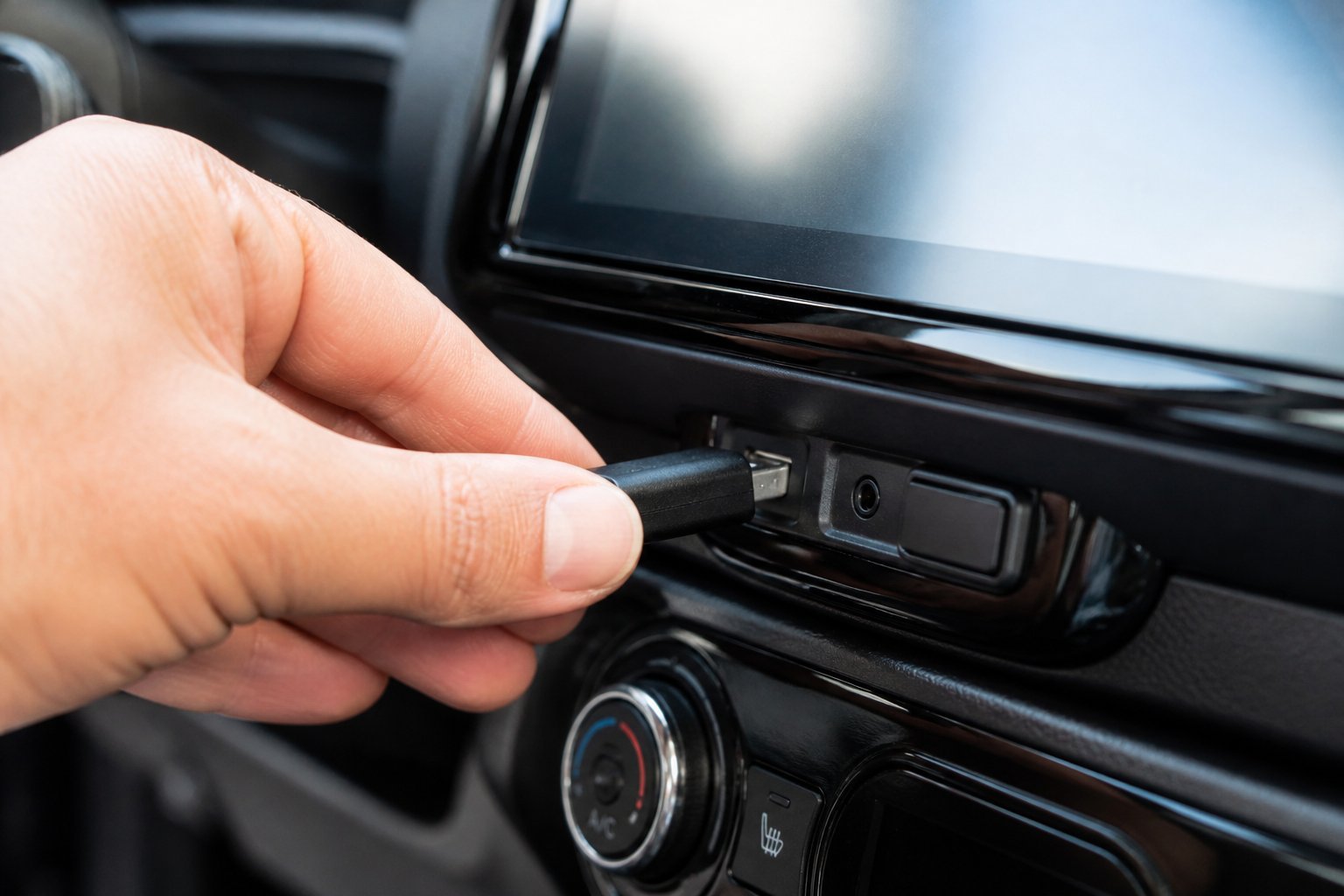
If your car already has Apple CarPlay but makes you plug in every time, this small dongle is the easiest upgrade in this guide. Plug it into the USB port you already use for CarPlay, pair your iPhone once, and from then on it connects on its own when you start the car, even with the phone in your pocket or bag.
Ottocast says it uses 5 GHz Wi-Fi for the connection and keeps your factory controls working: touchscreen, knob, steering-wheel buttons and Siri. It comes with both USB-A and USB-C cables to suit newer and older cars. Wireless CarPlay uses more phone battery than a cable, so a wireless charging pad is a good partner for long commutes.
- Plug-and-play, with no wiring
- Connects automatically after the first setup
- Keeps factory touchscreen, knob and wheel controls
- USB-A and USB-C cables included
- Only works in cars that already have wired CarPlay
- Wireless CarPlay drains the phone faster than a cable
Wireless Android Auto for wired-only cars
AAWireless TWO does for Android phones what the Ottocast does for iPhones. It plugs into a car or stereo that supports wired Android Auto and makes the connection wireless. A button on the adapter makes it easy to switch between phones, which is handy if two drivers share the car, and a free app handles updates and settings.
Check two things first: it works only with systems that support wired Android Auto, and your phone needs Android 11 or newer and must be on Google’s list of compatible phones. The maker also warns that heavy Wi-Fi interference can affect the connection, and its app has a setting to help with that.
- Turns wired Android Auto wireless
- Easy switching between phones
- App for updates and settings
- Two-year warranty
- Needs Android 11 or newer
- Doesn’t add Android Auto to cars that lack it
Bluetooth and charging for older cars
Plenty of cars on the road still have no Bluetooth at all. The Scosche BTFM9 fixes that for about the price of a takeout lunch. It plugs into the 12V socket, pairs with your phone over Bluetooth, and sends the sound to your car radio on an empty FM frequency. It also has buttons for volume, play/pause and answering calls, works with Siri and Google voice commands, and charges two devices through USB-C and USB-A ports.
Sound quality is limited by FM radio, and in big cities with crowded airwaves you may need to try a few frequencies to find a clean one. For podcasts, navigation and hands-free calls on the daily drive, though, it is a huge step up from nothing.
- Adds Bluetooth music and calls to any car with FM radio
- Dual USB-C and USB-A charging
- Voice assistant support
- Three-year limited warranty
- FM sound is not hi-fi
- Can pick up interference in busy cities
Best new stereos for daily driving
The best new stereo for most commuters
If your car has an old stereo with no CarPlay or Android Auto, Pioneer’s DMH-W3000NEX is the one we would fit. It supports both wired and wireless Apple CarPlay and Android Auto, so your maps, music and messages appear on the 6.8-inch capacitive touchscreen as soon as you get in. A quick-access slider bar makes it easy to jump between CarPlay and the stereo’s own settings without digging through menus.
It is well equipped for sound too: a 13-band graphic EQ, time alignment and six channels of 4-volt pre-outs if you add an amplifier later. Built-in Wi-Fi and Bluetooth, a backup camera input and Amazon Alexa support through Pioneer’s Vozsis app round it out. Its short chassis makes it easier to fit behind crowded dashboards.
- Wired and wireless CarPlay and Android Auto
- 13-band EQ and time alignment
- Short chassis is easy to install
- Backup camera ready
- Built-in amp is modest, as on most stereos
- Alexa needs extra apps
A big screen for cars with a small dash slot
Many older cars and trucks only have a single-DIN stereo slot, which usually rules out a big touchscreen. Sony gets around that by mounting the XAV-AX4000’s 6.95-inch screen on a body that fits a single-DIN space, so the screen sits in front of the dash.
You get wireless Apple CarPlay and Android Auto, plus a 14-band equalizer and time alignment for each of the four speaker channels and the subwoofer output, in 1 cm steps. That is enough to make road-noise-heavy commutes sound clearer by trimming boomy bass and lifting voices.
- Fits a single-DIN dash slot
- Wireless CarPlay and Android Auto
- 14-band EQ and fine time alignment
- Screen sits proud of the dash, which doesn’t suit every car
- Pricier than the Pioneer
Wireless phone mirroring at a lower price
JVC’s KW-M695BW is a solid choice if you want wireless CarPlay and Android Auto for less. It has a 6.8-inch capacitive touchscreen, a 13-band graphic EQ, and USB mirroring for Android phones. Like the Pioneer, it uses a short chassis that fits a wide range of cars, and it works with iDatalink Maestro modules to keep steering-wheel controls and other factory features.
It doesn’t have as many extras as the Pioneer, but for daily driving it covers the things that matter: an automatic wireless connection, clear hands-free calls and simple controls.
- Wireless CarPlay and Android Auto
- 13-band graphic EQ
- Short chassis
- iDatalink Maestro compatible
- Fewer sound-tuning options than the Pioneer or Sony
Best speakers, bass and noise upgrades
Fuller sound that works with your factory stereo
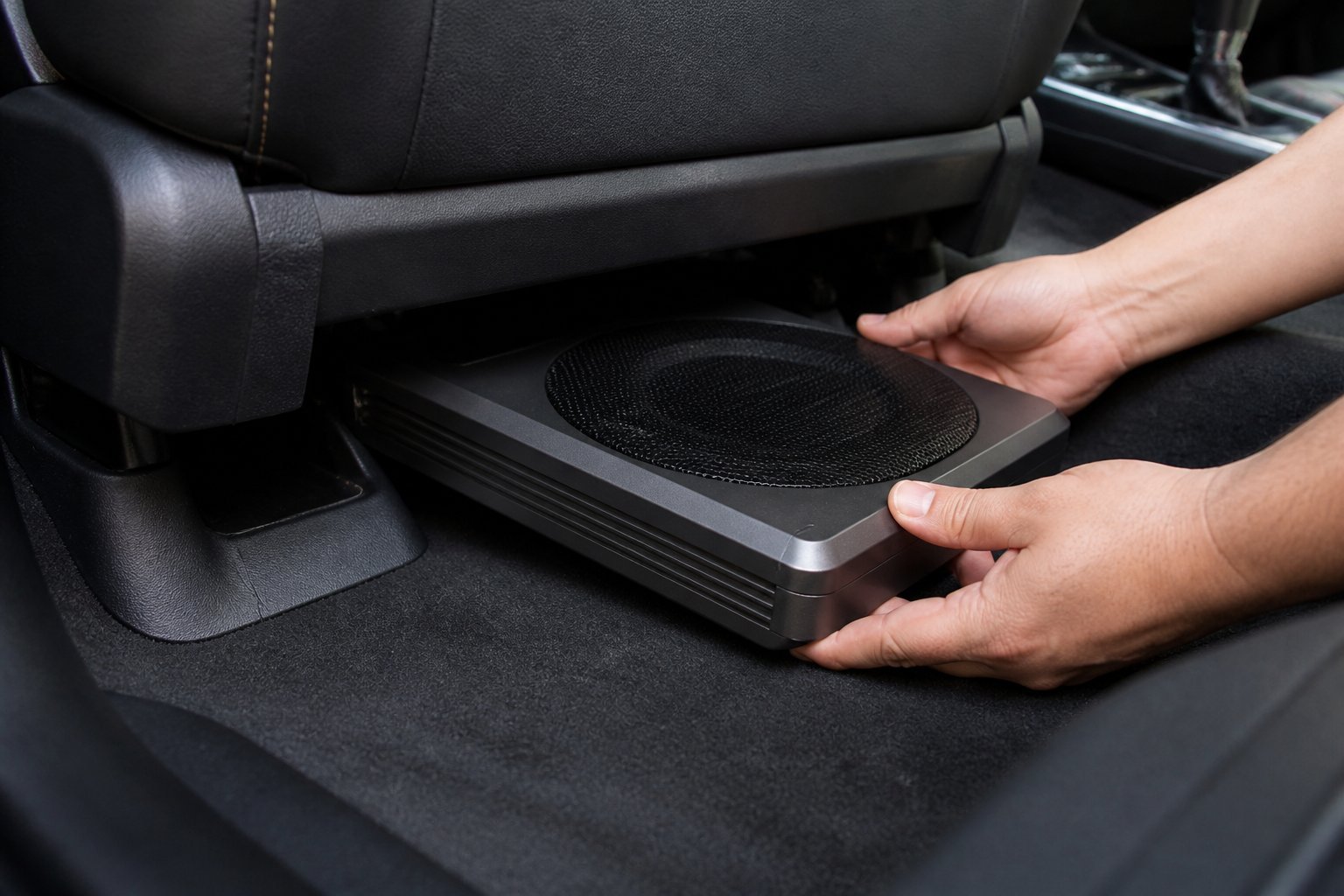
Most factory systems sound thin at normal volume, and road noise makes it worse because it drowns out low notes first. A compact powered sub fixes that without taking over your trunk. Kicker’s Hideaway HS10 puts a 10-inch woofer and a 180-watt RMS amplifier in a slim aluminum enclosure that fits under many seats or behind a truck’s rear seat.
It has both speaker-level and line-level inputs, so it connects to almost any factory or aftermarket stereo, and it can switch itself on automatically. The included remote knob is the everyday win: turn the bass up for music and down for podcasts without touching the stereo’s volume. Kicker lists the full specs on its Hideaway HS10 page.
- Fits under many seats
- Works with factory or aftermarket stereos
- Remote bass level knob
- Built-in 180 W RMS amp
- Needs a power wiring kit
- Check under-seat space before buying
Clearer voices and music that drop straight in
Factory paper-cone speakers are often what makes voices sound muffled on calls and podcasts. Kicker’s CS-Series CSC65 is a simple swap that makes a clear difference. Its tweeter sits flush with the woofer, and the speaker is shallow enough to fit nearly every car, so it usually drops into the original openings behind the stock grilles.
With 90 dB sensitivity it sounds lively on a factory or aftermarket stereo with no extra amplifier, and its polypropylene cone and UV-treated surround are built to handle heat and sunlight. Kicker also sells the same series in 6×9 and other sizes for rear decks and trucks.
- Shallow, flush design fits almost any car
- 90 dB sensitivity works without an amp
- Heat- and UV-resistant materials
- Not as detailed as a component set
- Sizes vary by car, so check yours
A quieter cabin makes everything sound better
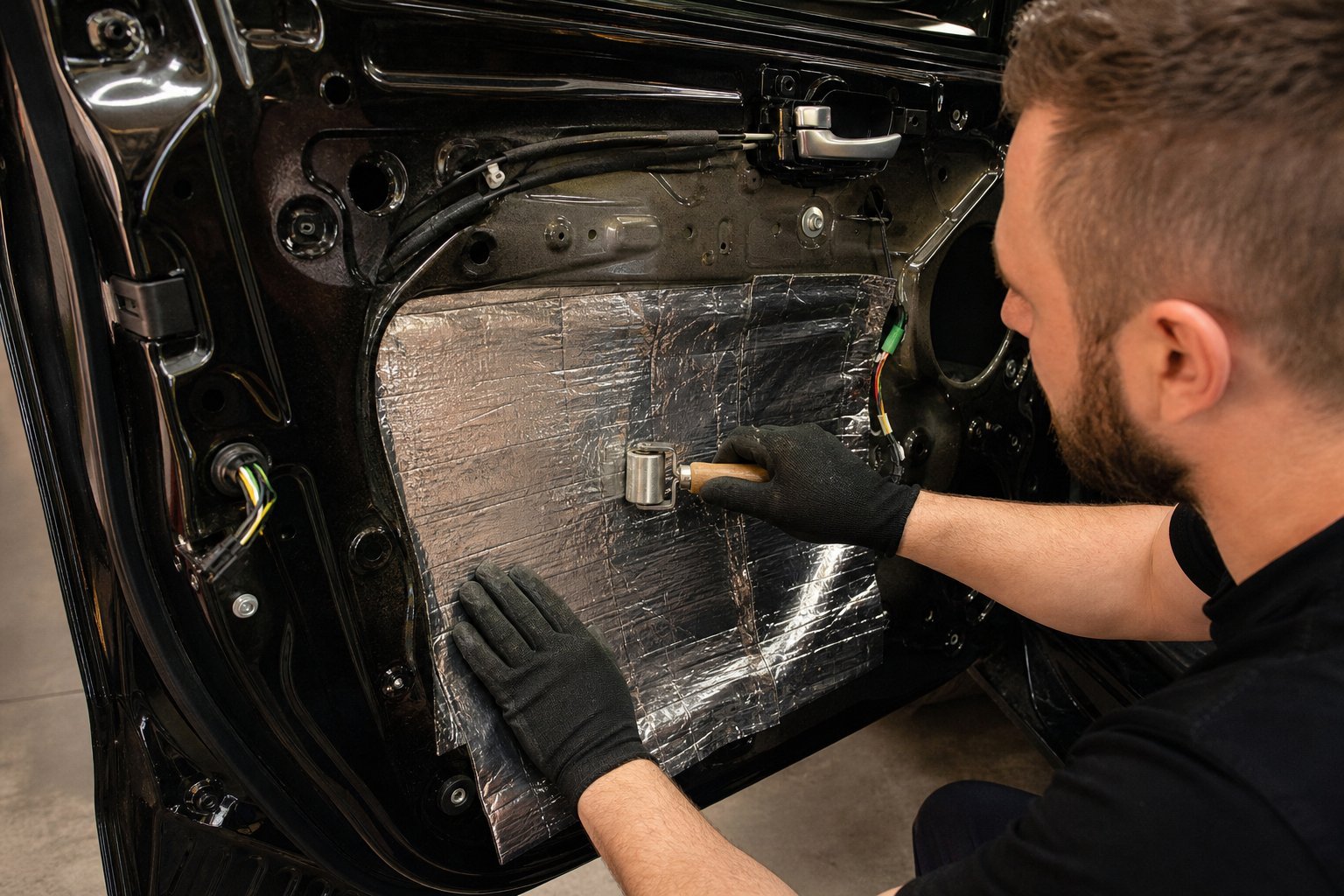
Sound deadening is the upgrade daily drivers forget. Thin metal doors vibrate and let in tire and wind noise, which makes you turn the volume up and makes speakers rattle. Dynamat Xtreme is a butyl rubber mat with a foil backing that you press onto the inner door skin to stop that vibration.
This kit holds four 12 x 36 inch sheets, 12 square feet in total, which Dynamat says is enough for two standard doors. Fitting it takes an afternoon with the door panels off. A quieter cabin makes music and calls clearer at lower volume, and it makes new speakers sound better too.
- Cuts road noise and door rattles
- Improves mid-bass from door speakers
- Made in the USA
- Door panels must come off to fit it
- Only covers two doors
How to choose a car audio system for everyday driving
Check whether your car has wired CarPlay or Android Auto, Bluetooth, or just an FM radio. That decides whether you need an adapter, a transmitter or a new stereo.
On short daily trips, a phone that connects on its own saves time and hassle every time you get in.
Many modern cars need an integration adapter to keep steering-wheel controls, chimes and settings when you change the stereo.
Road noise masks bass and makes voices harder to hear. A sub, better speakers and sound deadening all help.
What makes a good car audio system for everyday driving?
A daily driver’s needs are different from a show car’s. Most of your listening happens at moderate volume, often to podcasts, calls and navigation prompts, with engine, tire and wind noise in the background. So the best car audio systems for everyday driving focus on three things: a phone connection that just works, clear voices, and music that sounds full without having to turn it up.
Start with the connection, because it affects every trip. If your car already has wired CarPlay or Android Auto, a wireless adapter is the best value upgrade there is. If it has no smartphone support at all, a new stereo makes the biggest difference. Crutchfield’s car stereo buying tips are a good primer on fit and features. See our CarPlay and Android Auto guides and car stereo guides for more.
Then work on sound. Better door speakers make voices clearer, a compact powered sub restores the low notes road noise hides, and sound deadening lowers the noise itself. Our car speaker guides and subwoofer guides go into more detail.
How to upgrade your everyday car audio in a weekend
-
Sort out your phone connection
Plug in a wireless CarPlay or Android Auto adapter if your car supports wired phone mirroring, or a Bluetooth FM transmitter if it doesn’t. If it has neither, fit a new wireless stereo.
-
Set the EQ for voices
On a new stereo, cut a little low bass (around 100-200 Hz) and lift the upper mids slightly. Voices and podcasts become clearer over road noise.
-
Swap the front door speakers
Fit shallow coaxials like the Kicker CSC65 using the original openings. Check your car’s speaker size first.
-
Deaden the front doors while they're open
With the panels off for the speakers, add sound deadening to the inner door skin. It takes little extra time.
-
Add a compact powered sub
Mount a sub like the Kicker Hideaway HS10 under a seat, connect its speaker-level inputs, and set the remote knob so the bass blends at your usual volume.
Wireless adapters only work in cars that already support wired CarPlay or Android Auto, so check your owner’s manual first. For a new stereo, look up the dash kit, wiring harness and steering-wheel control adapter for your exact car, and add them to your budget.
Everyday car audio FAQ
What are the best car audio systems for everyday driving?
The best car audio systems for everyday driving combine an easy wireless phone connection with clear sound at normal volume. Our top picks are the Pioneer DMH-W3000NEX stereo, the Ottocast U2-AIR adapter for cars with wired CarPlay, Kicker CS-Series speakers and the Kicker Hideaway HS10 compact subwoofer.
Can I add wireless CarPlay without changing my stereo?
Yes, if your car already has wired CarPlay. A plug-in adapter such as the Ottocast U2-AIR connects to the USB port and makes it wireless. If your car has no CarPlay at all, you need a new stereo.
Is a Bluetooth FM transmitter worth it?
For an older car without Bluetooth, yes. It adds wireless music and hands-free calls for very little money. Sound quality is limited by FM radio, so it suits podcasts and calls better than critical listening.
Will a subwoofer work with my factory stereo?
Most compact powered subs, including the Kicker Hideaway HS10, have speaker-level inputs that connect to factory speaker wires, so they work with almost any stereo.
Does sound deadening really make a difference?
Yes. It reduces door vibration and road noise, which makes music and calls clearer at lower volume and helps door speakers produce fuller mid-bass.
The bottom line
The best car audio systems for everyday driving fix the things you notice every day. If your car has wired CarPlay or Android Auto, start with a wireless adapter. If it doesn’t, the Pioneer DMH-W3000NEX is the stereo to get. Then add Kicker CS-Series speakers, a Kicker Hideaway HS10 under the seat and some sound deadening, and your daily drive will sound clearer and fuller without a big custom install.