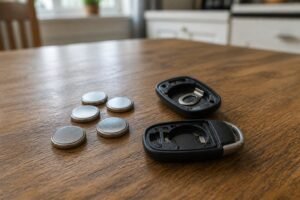

Yes, signal-blocking pouches really work, but only if yours is well made, fully closed and not worn out, and the only way to know is to test it on your own car. A good pouch stops your key fob from hearing the car and the car from hearing the fob, which is exactly what a relay attack needs to steal a keyless car. A cheap or tired pouch can leak just enough signal to let a thief in. Below is a simple home test that takes under a minute, plus what to do when a pouch fails.
Do signal-blocking pouches really work?
Short answer: a good one does, a worn or badly closed one may not, and a one-minute test on your own car tells you which you have.
Independent tests by UK car magazines have found that most pouches block a key fob when they are new and sealed properly. The trouble starts later: linings crack, flaps get left open and fake pouches are sold as the real thing. This guide shows you how to check yours at home, using nothing but your car and your key.
- How a Faraday pouch blocks a key fob
- What independent tests found
- The 60-second home test, step by step
- Why pouches fail, and how to spot it
- Foil, tins, fridges and other alternatives
- What to do if your pouch fails
- They work when they are sound In What Car?’s 2026 test, all eight pouches blocked the key’s signal.
- Wear is the weak spot Linings crack with daily use, so a pouch that passed last year can fail today.
- Test on your own car Walk up with the fob sealed inside, pull the handle, then try the start button. Nothing should happen.
- Re-test every month It takes under a minute and is the only way to know the pouch still works.
- Layer your security A pouch only stops relay theft. Add a steering lock and keep keys away from doors.
How signal-blocking pouches work
A keyless car and its fob talk all the time you are near the car. When you touch the door handle or press the start button, the car sends out a short-range wake-up signal. If the fob hears it, the fob answers with its own coded radio reply, and the car unlocks or starts. Security researchers at IOActive describe this as a low-frequency signal from car to fob (usually 125 or 134 kHz) and an ultra-high-frequency reply from fob to car.
The car’s wake-up signal is weak on purpose. Supplier HELLA lists the passive range of its smart keys at about 2 meters, while the button range reaches roughly 100 meters. That short passive range is the whole idea of keyless entry: the car should only open when the key is right next to it.
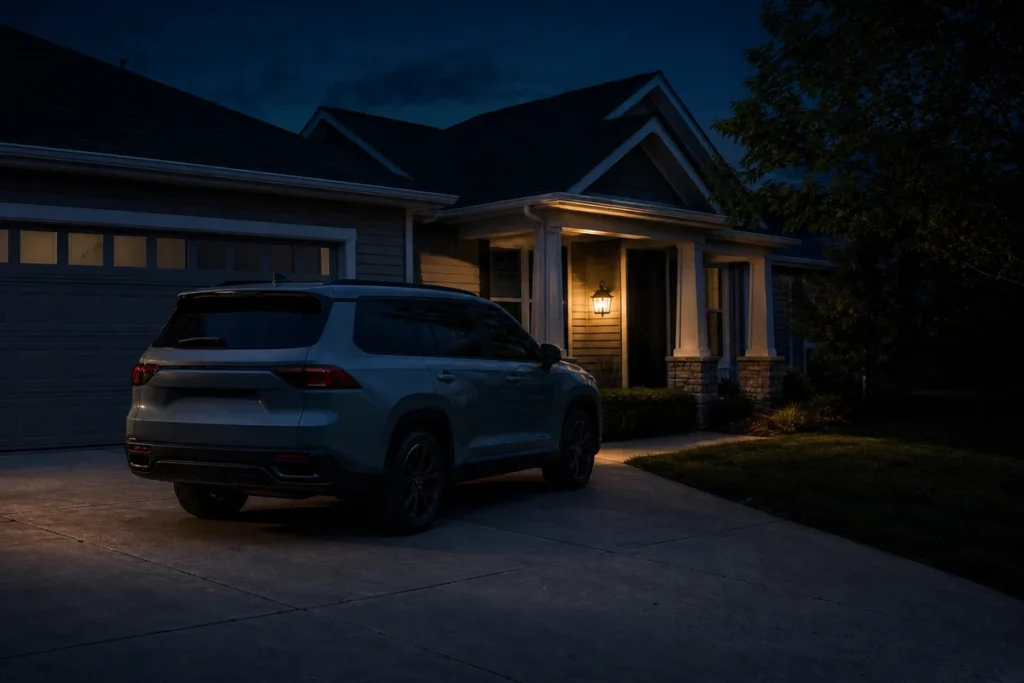
A relay attack breaks that idea. One thief stands near your house with a device that picks up the fob’s signal, and a second thief stands by the car with a device that repeats it. The car thinks the key is in your pocket, so it opens and starts. Stolen-vehicle recovery firm Tracker told Deeside.com that relay attacks can take under 60 seconds and can reach a fob near a door, window or outside wall.
Signal-blocking pouches stop this by wrapping the key in layers of metal fabric. The metal forms a small Faraday cage, named after the scientist Michael Faraday, which soaks up or reflects radio waves before they can reach the fob. If the wake-up signal can’t get in and the reply can’t get out, there is nothing for the thieves to relay. For the full picture of how keyless systems work, see our Keyless Entry & Security guides.

A keyless fob answers the car every time it hears the wake-up signal. A pouch’s job is to stop it hearing anything.
Do signal-blocking pouches really work? What the tests found
The best evidence comes from magazines that test pouches on real cars. What Car? tested eight pouches for its 2026 guide and reported that every one blocked the signal from the car key. Its testers then scored the pouches on extra things, such as blocking Bluetooth and GPS and how robust they felt.
Auto Express took a harder line. It tried to open three keyless cars with the fobs inside each pouch, then tumbled the pouches 1,200 times with keys inside to copy about 18 months of being handled twice a day. After that it tried to open and start the cars again with the pouches placed next to the car’s sensors. The winning pouch blocked every signal before and after the wear test.
The same Auto Express test also shows where pouches slip. Two pouches leaked a faint signal when they were overfilled and the flap did not close cleanly. That matters in real life, because many people cram a fob, a house key and a key ring into a pouch built for a single fob.
Experts urge some caution too. Back in 2019, a Thatcham Research spokesperson told Auto Express that the pouches it had tested worked, but it could not guarantee that every pouch on sale would. Press coverage at the time, such as this Express & Star report, also noted that some cars were stolen while their keys sat in pouches.
More recently, Tracker warned through Fleet News that imitation Faraday pouch products are flooding the market. Its advice was the same simple check this guide is built on: take the pouch, with the fob inside, close to the car and see whether the car reacts. Tracker also pointed out that the best pouch in the world is useless if you forget to put the spare in it or leave it open.
So the honest answer is that signal-blocking pouches really work as a design, but each pouch is only as good as its lining, its seal and the way you use it. That is why the test below matters more than any brand name or police badge on the packet.
How to test a Faraday pouch at home in under a minute
You don’t need any tools, apps or a second phone. You need your car, your key fob and the Faraday pouch. The test copies what a thief’s relay does: it puts the sealed fob right next to the car, where the car’s wake-up signal is at its strongest. If the car can’t find the key from a few inches away, a relay device outside your house has no chance.
Start with the car locked and the fob in your hand. Then follow these steps.
- Seal the fob (10 seconds). Put only the fob in the shielded pocket. Close the flap or zip all the way, with no fabric or key ring caught in the seal.
- Try the door (15 seconds). Walk up to the driver’s door and hold the pouch against the handle. Pull the handle or touch its sensor. The car should stay locked.
- Try the trunk (10 seconds). If your car has keyless trunk opening, hold the pouch near the trunk button and press it. Nothing should happen.
- Try the start button (20 seconds). Take the fob out, unlock the car, get in, and put the fob back in the sealed pouch. Close the door, press the brake and push the start button. The dash should say something like “Key not detected”.
- Check the backup spot (5 seconds). Hold the sealed pouch right against the start button or the backup key slot and try once more. The engine should still not start.
If the car stays locked and won’t start at every step, the Faraday pouch passes. If the doors unlock, the trunk opens or the engine starts at any point, the signal is getting through and the pouch is not protecting you.
The start-button step is the one most people skip, and it is the most telling. Car parts retailer Autodoc notes that some keyless systems run a second key check at ignition, so a pouch that seems fine at the door can still let the car start. A Dodge owner on the Hellcat Forum put it simply: if the car starts with the fob in the pouch, throw the pouch away.

Hold the sealed pouch right against the door handle. If the car can’t find the key from there, a relay can’t either.
A note on the button test
Some guides tell you to press the fob’s lock or unlock button through the pouch. That is a useful extra check, but it is not the main one. Pressing a button makes the fob shout at full power, while a relay attack listens for the fob’s quiet passive reply. A pouch can let a button press through and still block passive entry, or the other way around. Always do the door and start-button steps, because they copy how thieves actually work.
Why the phone test is not enough
Guides such as Carwow also suggest putting a phone in the pouch and calling it. If it rings, the pouch is leaking. That is a fair quick check for bigger pouches. But phones use much higher frequencies than the car’s wake-up signal, so a pouch can block a phone call and still let the low-frequency key signal through. Use the phone test as a bonus, never as a replacement for the test on your own car.
How often should you test?
Test a new Faraday pouch the day you buy it, before you trust it overnight. After that, run the 60-second test once a month and any time the pouch gets wet, crushed or snagged. Set a phone reminder for the first of the month. It costs you a minute and could save you a car.
The 60-second Faraday pouch test
-
Seal it
Only the fob in the shielded pocket, flap fully closed, nothing caught in the seal.
-
Pull the door handle
Hold the pouch against the handle and pull. The car must stay locked.
-
Try the trunk
Press the keyless trunk button with the pouch close by. Nothing should open.
-
Press start
Sit inside with the fob sealed and press the start button. You want a “Key not detected” warning.
-
Check the backup spot
Hold the sealed pouch on the start button or key slot. The engine must still not start.
Any unlock or start means the pouch is leaking. Replace it.
Why signal-blocking pouches stop working
When signal-blocking pouches fail, it is rarely because the science is wrong. It is usually one of five everyday problems.
1. The lining cracks with daily use
The metal fabric inside a pouch is thin. Every time you push a fob in and pull it out, the lining bends and rubs. Over months, tiny cracks form, and radio waves slip through the gaps. A Honda Jazz owner told Honest John that two pouches bought with the car had stopped working, and the expert reply confirmed that cracks in the material can let the signal through. The Hellcat Forum owner above found the same thing with two different brands.
2. The flap is not fully closed
A pouch is a cage only when it is sealed. A flap that is half stuck, a Velcro strip covered in lint or a magnetic catch that pops open leaves a gap. Auto Express found that one magnetic fastener kept popping open in its test, and Tracker lists leaving the pouch open as one of the most common mistakes.
3. It is overfilled
Many pouches are cut to fit one slim fob. Add a house key, a key ring and a tag, and the flap can’t fold flat. That is exactly where the Auto Express testers saw faint leaks.
4. The fob is in the wrong pocket
Some pouches have two pockets, and only one of them is shielded. The outer pocket is often just for cards or tickets. If you slip the fob into the outer pocket, it is not protected at all.
5. It was never real in the first place
Fake pouches look the same as real ones from the outside. Tracker’s Head of Police Liaison, Clive Wain, warned that some sellers are cashing in with fake or inadequate pouches, cases and bags. A new pouch that fails the test on day one is not a bad pouch. It is not a Faraday pouch.

Thin metal linings crease and crack along the folds, much like foil. You often can’t see the damage, so test rather than look.
A pouch can look perfect outside and still leak. Cracks in the lining are often hidden under the outer fabric. The only reliable check is the test on your own car.
Foil, tins, fridges: do the alternatives work?
You will see lots of free tricks online. Some help, some are risky, and none of them should be trusted without the same home test.
Aluminum foil. Foil can block a fob, but not always. In a small Snopes test with three cars, a foil-wrapped Subaru key could not reach its car from 20 feet but still worked from 10 feet. Foil also tears and creases quickly. Fine in an emergency, poor as a daily habit.
Metal tins and boxes. A metal box with a tight lid can work well at home, and police often suggest one. But a loose lid leaks. One PriusChat member found that a small mint tin was a leaky cage because its lid did not seal. Test any box the same way: fob inside, lid shut, box held next to the car.
Fridges and microwaves. Both are metal boxes, and both can block a fob. But cold and condensation are hard on fob batteries, and SlashGear warns that the big risk with a microwave is forgetting the keys are inside. Please don’t make either your regular key spot. Cold can drain a fob battery fast, too, as our key fob care tips explain.
RFID wallets. Card-blocking wallets are built for contactless cards, not car keys. They may or may not stop your fob. Test before you trust.
Faraday pouch myths
Quality varies, and fakes are common. Only a test on your own car proves it works.
Linings wear and crack with daily use. A pouch that passed last year can fail today.
Phones use different frequencies from the car’s wake-up signal. Test with the car, not the phone.
It only stops relay attacks. Thieves can still use other methods, so add a steering lock too.
What to do if your Faraday pouch fails the test
First, don’t panic. A failed test simply means the pouch has to go. Here is what to do next.
- Replace it right away. A leaking Faraday pouch gives false peace of mind, which is worse than none.
- Retest the new one on day one. Run the full 60-second test before you rely on it.
- Protect the spare as well. A sealed main key and a spare in a drawer by the door still leaves an opening. Keep both in a pouch or a tested metal box.
- Move your keys away from doors and windows. Even with a pouch, store keys deep inside the house, as police and Tracker advise.
- Check for a sleep mode. Some fobs go to sleep when they stop moving, and some cars let you switch off passive entry. Your owner’s manual will say.
If the car keeps reporting “Key not detected” even when the fob is out of the pouch, the problem is not the pouch. A weak battery is the usual cause, so see our guide to why a car is not detecting the key fob and our key fob battery guides.

A metal box with a snug lid, kept away from the front door, can be a good home spot for keys. Test it first, just like a pouch.
How to pick a Faraday pouch that will pass the test
Price is not a reliable guide. In the Auto Express test, a budget pouch won, while a far pricier one scored lower. Look for these features instead when you buy a Faraday pouch.
- The right size. Choose a Faraday pouch that fits your fob with room to close the flap flat. A key ring should not sit in the seal.
- A strong closure. A wide Velcro strip or a fold-over flap that seals across the full width beats a small magnetic catch.
- Several lining layers. More layers of metal fabric give more margin as the inner layer wears.
- A clear shielded pocket. If there are two pockets, you should be able to tell at a glance which one blocks the signal.
- A twin pack. Two pouches let you protect the spare key as well, or swap in a fresh one when the first fails.
Whatever you buy, treat the first test as part of the purchase. If a new Faraday pouch fails on day one, return it. If it passes, write the date on a sticky note and test again next month. Many owners swap their everyday Faraday pouch once a year anyway, because it gets the most wear, and keep the spare key in a sturdy metal box at home.
Faraday pouches and boxes worth testing
We haven't lab-tested these, and no listing can promise a pouch will still block the signal after months of folding. They're popular, low-cost options with two-packs or a box, so the spare is covered too. Test any of them on your own car the day it arrives, and again every few months.
Faraday pouches and boxes compared

Two double-layer pouches: one for each fob
A two-pack means the spare gets protected too, which is the step most owners skip. The listing describes a double-layer shielding lining, and the size suits a typical smart key. Whichever you buy, run the 60-second door-handle test on your own car the day it arrives.
- Covers main fob and spare
- Slim enough for a pocket
- Low cost
- Linings wear with daily folding
- Check your fob fits before sealing

Dual pockets and a keychain hole
TICONN’s pouch has a shielded pocket for the fob, a second pocket and a keychain hole, and comes in three sizes. Make sure the fob goes in the shielded pocket: TICONN says the shielding works when the flap is fully closed. Whichever you buy, run the 60-second door-handle test on your own car the day it arrives.
- Three size options
- Water-resistant outer
- Two pouches
- Second pocket isn’t the shielded one
- Flap must close fully

A cheap pair in a bright color
A low-cost two-pack. The bright color makes it easy to spot in a bag or a drawer, which helps you actually use it. Whichever you buy, run the 60-second door-handle test on your own car the day it arrives.
- Very low cost
- Easy to find in a bag
- Two pouches
- Budget linings may wear sooner
- Replace at the first failed test

A home box plus pouches for the road
Samfolk’s set pairs a box for home with pouches for when you’re out, so you’re covered in both places relay thieves work. Whichever you buy, run the 60-second door-handle test on your own car the day it arrives.
- Home and away in one set
- Good value
- Box avoids folding wear
- Small box size: check your fobs fit
A pouch is one layer, not the whole plan
Signal-blocking pouches really work against one thing: relay attacks. They do nothing against thieves who break a window, tow the car or plug into its wiring. As the WRDW What the Tech report put it in 2026, a pouch only protects against relay attacks and does not stop every kind of modern car theft.
Tracker’s advice is to use several layers. Park in well-lit places, use a visible steering wheel lock, keep keys out of reach of doors and windows, and think about a tracking device. Each extra layer makes your car slower and riskier to steal, and most thieves would rather move on to an easier target.
If you are buying a spare key, budget for a pouch at the same time, and read our spare car key guides. And if your fob is acting up for other reasons, start with our guides on why a key fob stops working, a key fob not starting the car and how to tell if a key fob is broken.
Faraday pouch questions
Do signal-blocking pouches really work?
Yes, when they are well made, fully closed and not worn out. Independent tests by What Car? and Auto Express found that sound pouches blocked keyless car keys. Wear, overfilling and fakes are what make them fail.
How do I test a Faraday pouch at home?
Seal the fob in the pouch, hold it against the door handle and pull. The car should stay locked. Then sit inside with the fob sealed and press start. You should get a “Key not detected” message.
How long does a Faraday pouch last?
There is no fixed life. It depends on how often you use it and how well it is made. Linings can crack within months of daily use, so test once a month.
Can I test a pouch with my phone?
A call that rings inside the pouch shows a leak, but a call that doesn’t ring doesn’t prove your key is safe. Phones and keyless entry use different frequencies, so always test with the car.
Is aluminum foil as good as a Faraday pouch?
Not reliably. Foil can block a fob, but small tests show results vary, and foil tears easily. Use it only as a stopgap, and test it the same way.
Do I need a pouch for my spare key?
Yes. A spare in a drawer near the door can be relayed just like the main key. Keep it in a tested pouch or metal box.
The bottom line
- Signal-blocking pouches really work when they are sound and sealed.
- Linings wear out, flaps get left open and fakes are common.
- The 60-second door-and-start test on your own car is the only proof.
- Re-test monthly and protect your spare too.
Don’t trust a pouch because of its label. Trust it because it passed your test this month.