Car audio guide: how to upgrade your car's sound system
This car audio guide explains, in plain English, how a car sound system works and how to upgrade it one step at a time. Whether you just want your phone to connect without a cable or you want concert-quality sound on your commute, the path is the same: understand the four main parts, fix the weakest one first, and build from there. Along the way we link to our detailed buying guides for car stereos, speakers, amplifiers and subwoofers, and CarPlay and Android Auto.
- Most factory systems are held back by their speakers, so start there for sound
- If your phone connection is the daily annoyance, fix that first with an adapter or new stereo
- Add an amplifier and subwoofer last, matched by RMS power
Key takeaways
- Four parts make a system Head unit, speakers, amplifier and subwoofer. Each upgrade improves a different part of the sound.
- Fix the weakest link first For most cars that is the speakers; for older cars it is often the stereo.
- Upgrade in stages Every step works on its own, so you can spread the cost over time.
- RMS power, not peak Use RMS ratings to compare and match amps, speakers and subs.
Our car audio buying guides
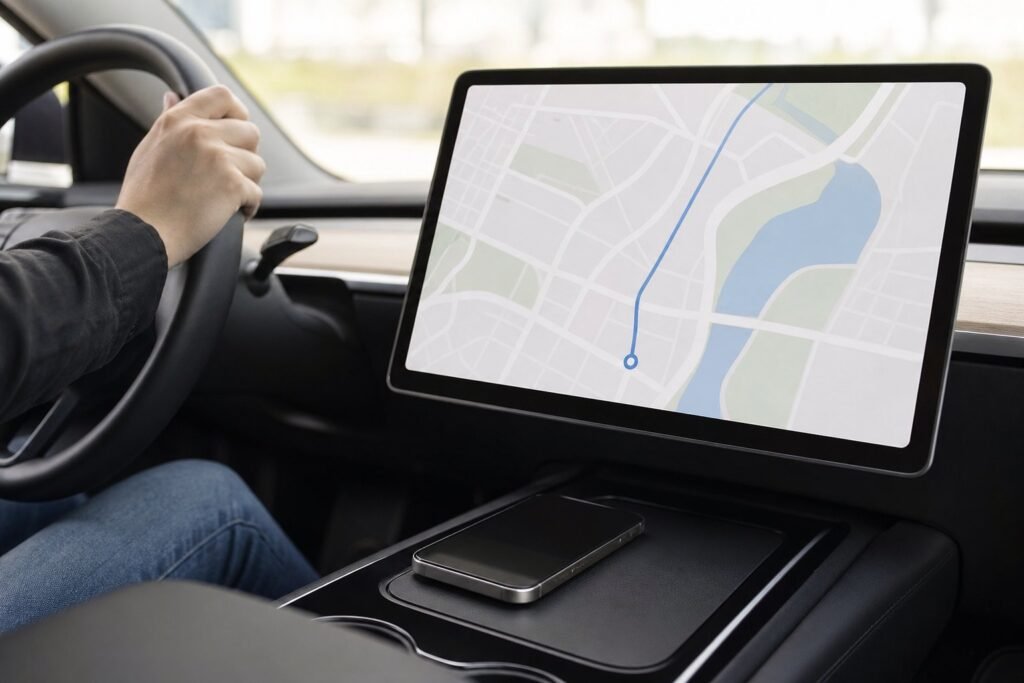
This guide is the starting point for our car audio section. When you know which part you want to upgrade, our detailed guides compare the best options: the best car stereos for every dash and budget, the best car speakers for 6.5-inch and 6×9 openings, car amplifiers and subwoofers for clean power and deep bass, how to add CarPlay and Android Auto to any car, and the best car audio systems for sound quality as a complete matched system.
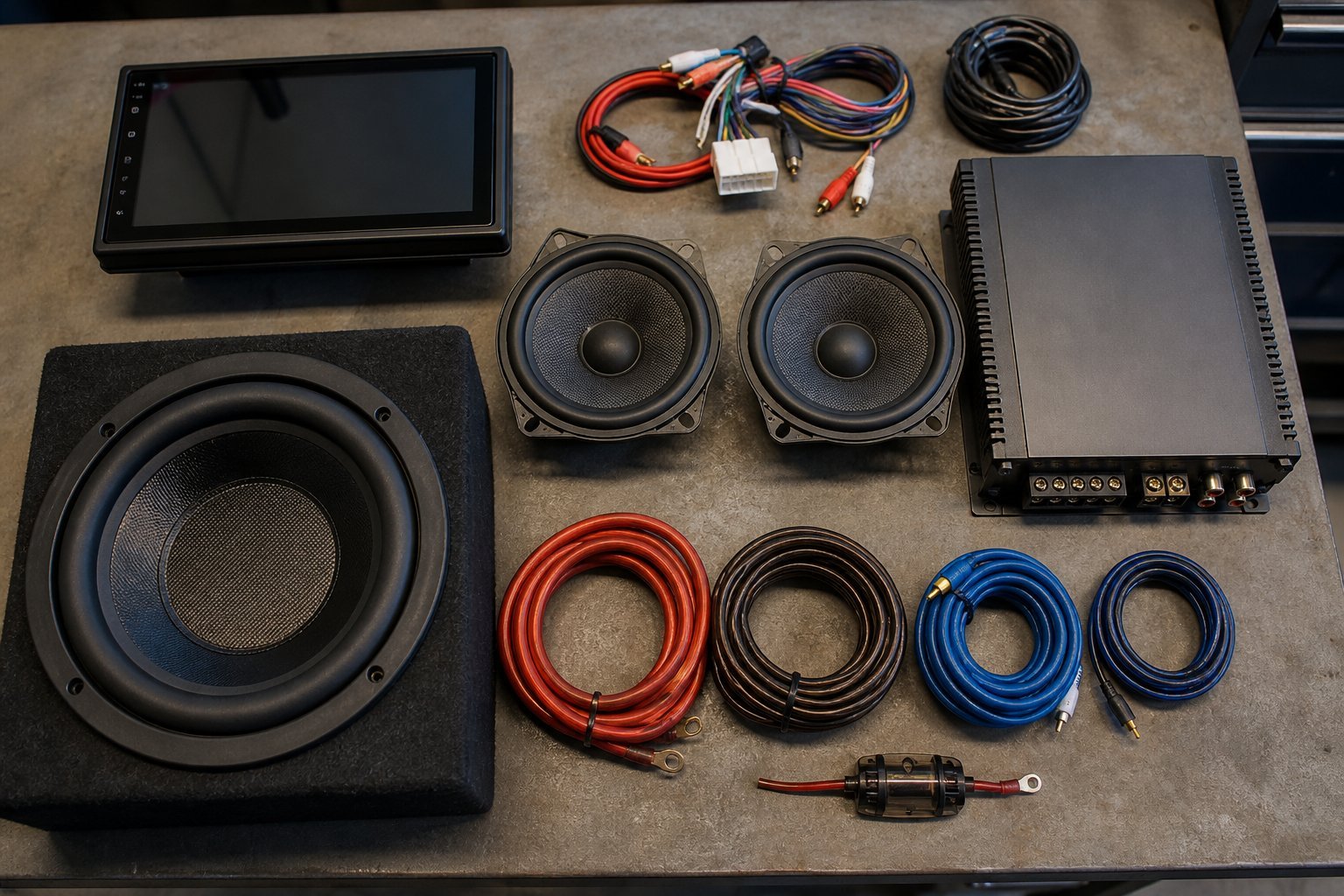
The four parts of a car audio system
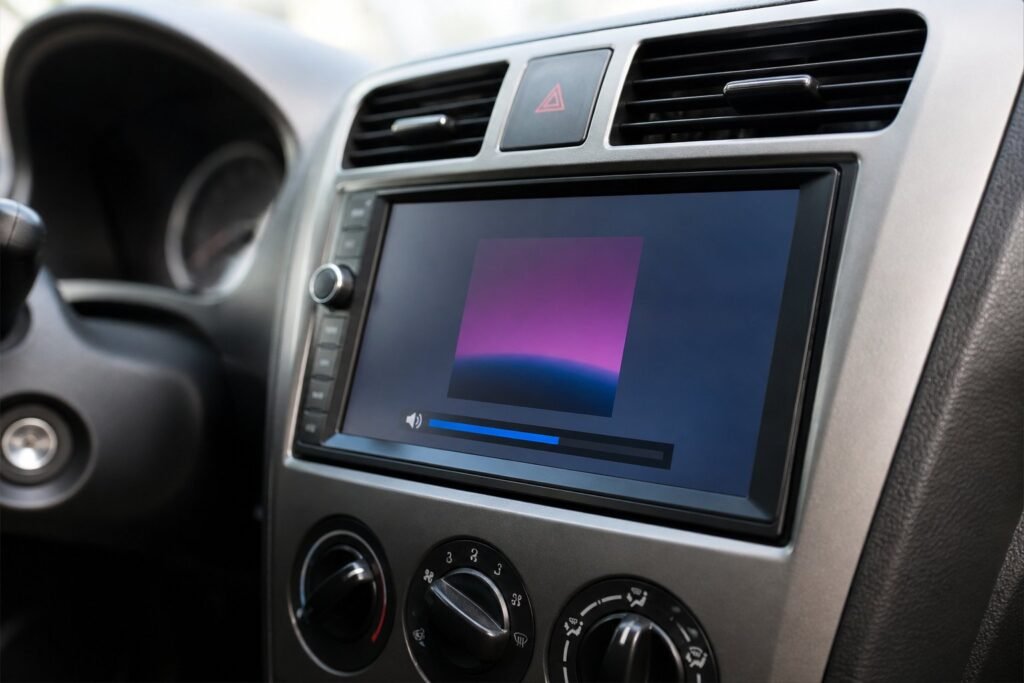
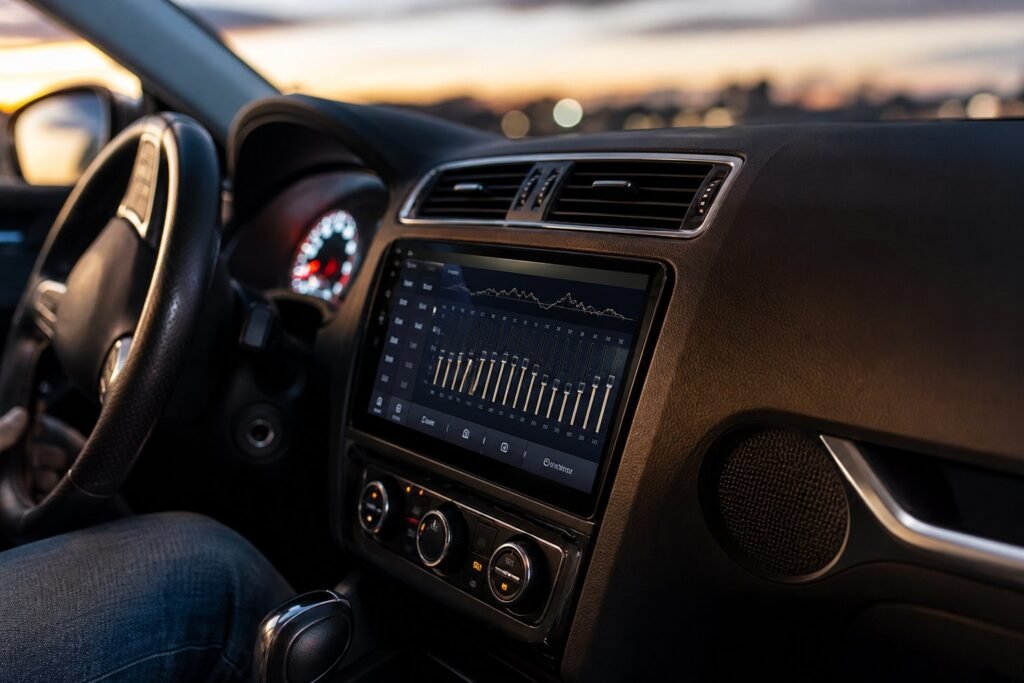
The head unit (the stereo or radio) is the source and the control center. It connects your phone, sets the volume and tone, and contains a small built-in amplifier. A modern head unit adds Apple CarPlay and Android Auto plus sound tools like a multi-band equalizer and time alignment. See our best car stereos guide.
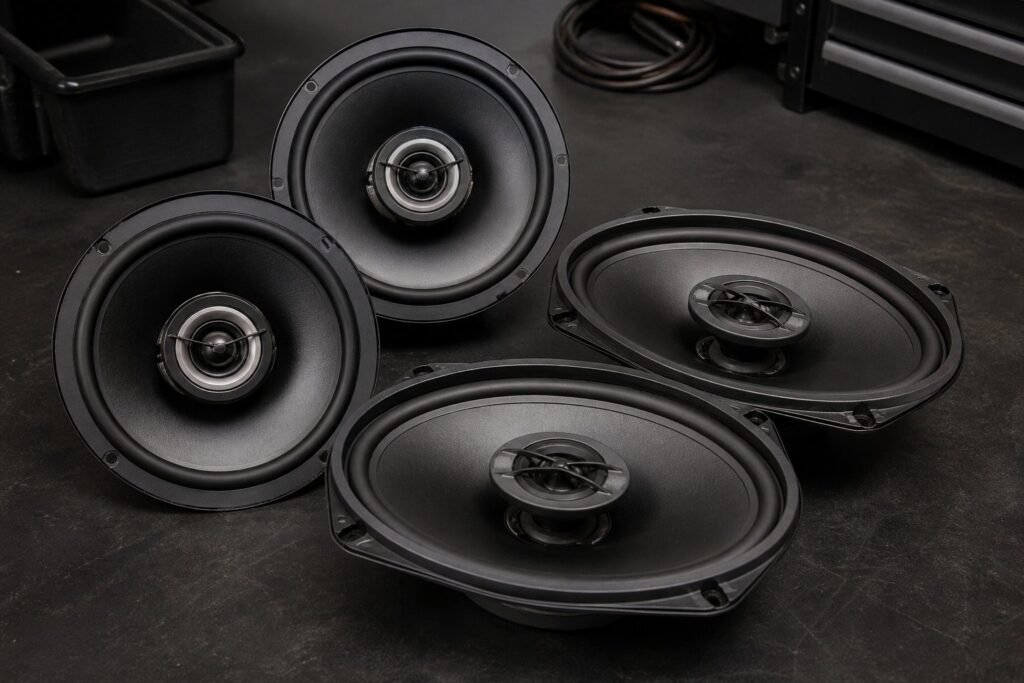
The speakers turn the signal into sound. Most cars have a pair in each front door and often a pair in the rear doors or rear deck, sometimes with small tweeters on the dash or door. Factory speakers are usually built to a low cost, which is why replacing them is the most noticeable sound upgrade. See our best car speakers guide.
The amplifier gives the speakers more clean power than a head unit can. That headroom keeps music clear and undistorted at highway volume. The subwoofer is a large speaker dedicated to the deepest bass, which frees your door speakers to play vocals and instruments cleanly. Both are covered in our car amplifiers and subwoofers guide.
Car audio terms explained
- Single-DIN / double-DIN
The two standard stereo sizes. Single-DIN openings are about 2 inches tall, double-DIN about 4 inches.
- RMS power
The continuous power an amplifier delivers or a speaker can handle. Use it to compare products; ignore peak power.
- Sensitivity
How loud a speaker plays from 1 watt (or 2.83 volts), in decibels. Higher numbers play louder on the same power.
- Impedance (ohms)
The electrical load a speaker presents. Most car speakers are 4 ohms; amplifiers produce more power into lower impedance.
- Coaxial vs component
Coaxial speakers have the tweeter built into the woofer. Component sets separate them for better imaging.
- Pre-outs
Low-level outputs on a head unit for connecting amplifiers. Higher voltage (4-5 V) means a cleaner signal.
- Time alignment
A head unit feature that delays nearer speakers so sound from all of them reaches you at once.
- Crossover
A filter that sends each speaker only the frequencies it handles well, such as bass to the subwoofer.
Where to start: match the upgrade to your problem
The best first upgrade depends on what bothers you most. If you’re tired of plugging in your phone, or your car has no CarPlay or Android Auto at all, start with the connection: our CarPlay and Android Auto guide covers the options. If voices sound muffled and music turns harsh when you turn it up, start with the front speakers. If the sound is clean at low volume but strains at highway speeds, add an amplifier. If music sounds thin, add a subwoofer.


A balanced starter car audio system
|
Head unit
Pioneer W3000NEX
|
Front speakers
JBL GTO629
|
Amplifier
Rockford R2-300X4
|
Subwoofer
Rockford P300-12T
|
|
|---|---|---|---|---|
|
|
|
|
|
|
| Role | Source and controls | Clear mids and highs | Clean power | Deep bass |
| Upgrade order | 1 (or 2) | 1 (or 2) | 3 | 4 |
| Detailed guide | Car stereos | Car speakers | Amps and subs | Amps and subs |
| Our score | 9.2 /10 | 9.2 /10 | 9.1 /10 | 9.0 /10 |
| Price | – | – | – | – |
| View | View | View | View |
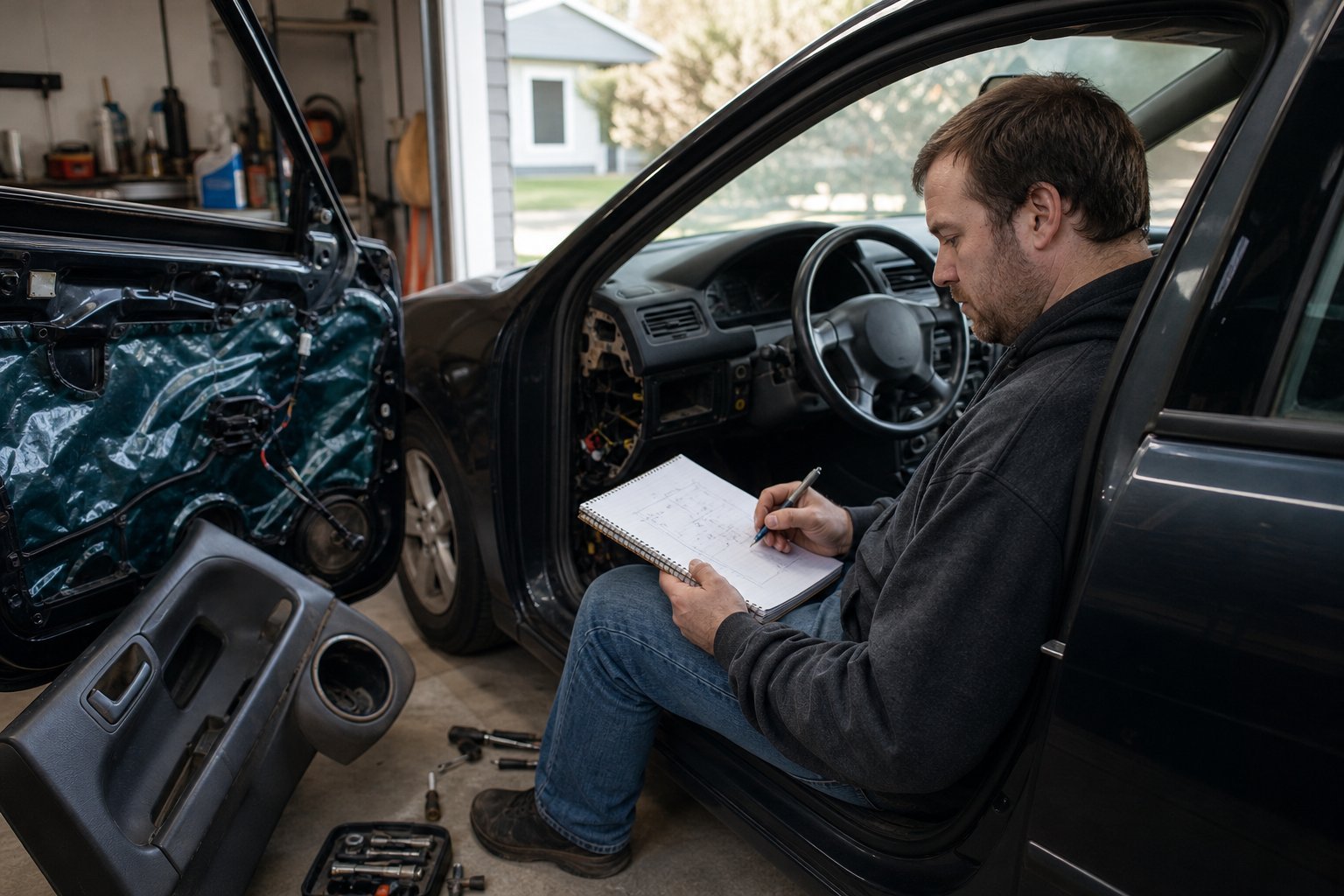
How to upgrade your car audio step by step
-
Decide what you want to fix
Write down the main problem: phone connection, muffled voices, harsh sound at volume, or weak bass. That sets your first step.
-
Check what fits your car
Look up your stereo size (single- or double-DIN), speaker sizes and depths, and whether your car has wired CarPlay or Android Auto.
-
Upgrade the head unit or phone connection
Add a wireless adapter if your car has wired CarPlay, or fit a new stereo if it has none. See our car stereo guide.
-
Replace the front speakers
Choose high-sensitivity coaxials for factory power, or a component set if you plan an amp. See our car speaker guide.
-
Add sound deadening
While the door panels are off, add butyl deadening mat to the doors to reduce rattles and road noise.
-
Add an amplifier and subwoofer
Match RMS power, use a properly fused wiring kit, and set gains carefully. See our amps and subwoofers guide.
-
Tune the system
Set time alignment for the driver’s seat, set crossovers so the sub handles deep bass, and keep the EQ mostly flat with small cuts.
Car audio myths and facts
Clean power matters, but sensitivity, speaker quality and tuning make a bigger difference to how a system sounds.
A 93 dB speaker on 20 watts can play as loud as an 87 dB speaker on 80 watts.
New speakers work with a factory stereo, and high-sensitivity models sound great on factory power.
If your stereo works and has the features you want, speakers may be the better first buy.
A subwoofer at a low level takes the deepest notes off the door speakers, so vocals and instruments sound cleaner.
It improves balance, not just volume.
Peak figures are marketing. RMS ratings show what equipment can handle or deliver continuously.
Matching RMS ratings protects speakers and gets the best sound.
What to look for in any car audio upgrade
Stereo size, speaker size and depth, and whether factory features run through the radio all vary by model.
Established brands publish RMS power and sensitivity you can rely on.
Pre-outs on the head unit and RMS headroom on speakers make later upgrades easier.
Modern dashboards can be complex. Some steps suit DIY, others are worth paying a pro for.
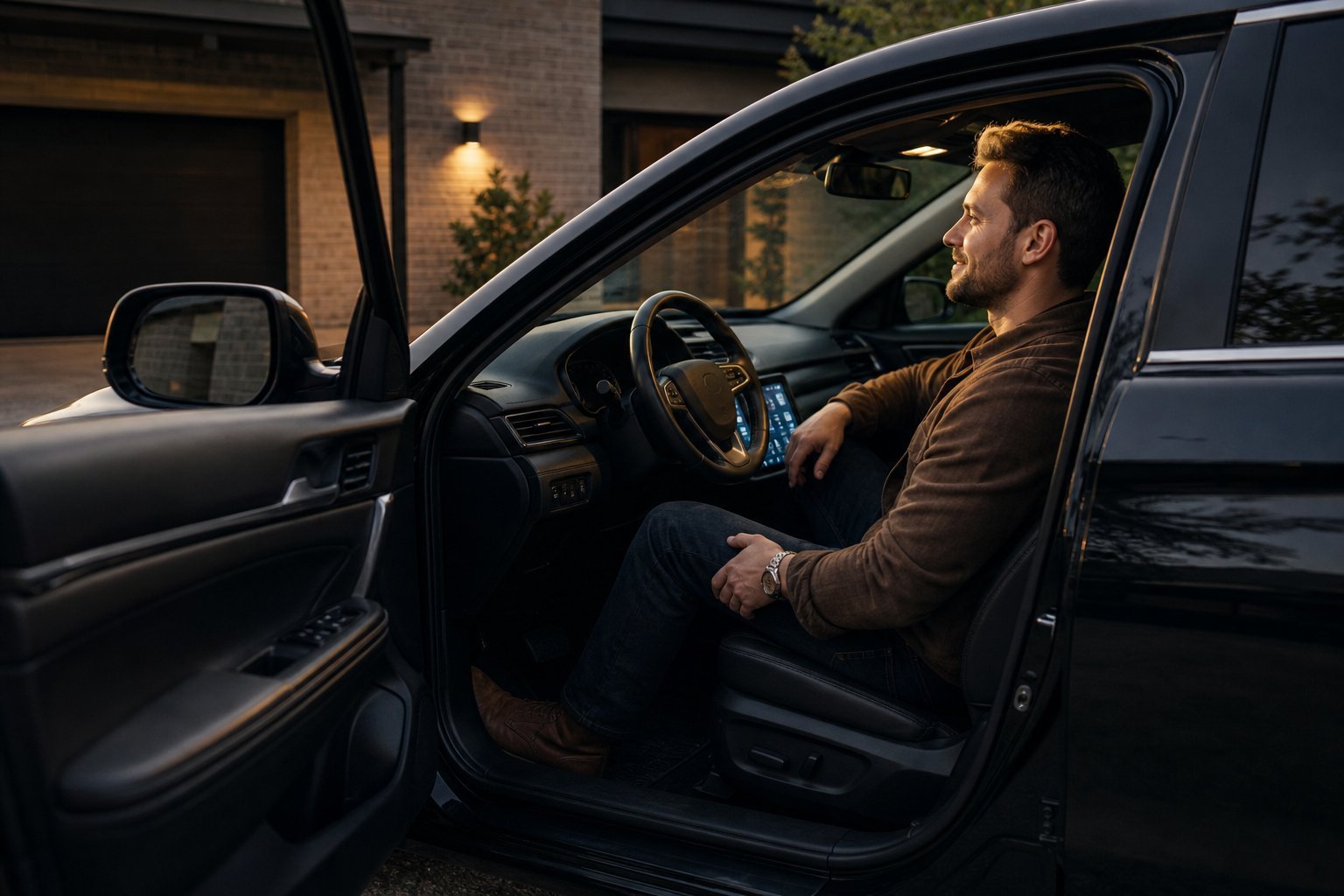
After each upgrade, play a few tracks you know well at normal volume. Listen for clear vocals, smooth cymbals and bass that sounds even rather than boomy. If something sounds off, check speaker polarity and EQ settings before blaming the equipment.
Car audio guide FAQ
What is the best first upgrade for car audio?
For most cars, the front speakers. If your main problem is phone connection, start with a wireless adapter or a new stereo instead. This car audio guide’s step-by-step section shows the full order.
Can I upgrade car audio and keep my factory stereo?
Yes. New speakers, a compact amplifier, a powered subwoofer and a wireless CarPlay adapter can all work with a factory stereo.
How much does a car audio upgrade cost?
It ranges widely. A wireless adapter or a pair of speakers is an affordable first step, while a full system with stereo, speakers, amp and subwoofer costs much more. Upgrading in stages spreads the cost.
Do I need a professional installer?
Speakers, adapters and powered subs are manageable DIY jobs for most people. Stereos in modern cars and amplifier wiring can be complex, and a professional installer is worth it if you’re unsure.
Will aftermarket car audio void my warranty?
In the US, adding aftermarket parts doesn’t automatically void a vehicle warranty, but the maker may deny a claim for damage caused by the installation. Careful installation with proper adapters avoids most problems.
The bottom line
A great car audio system is built one step at a time. Use this car audio guide to find your weakest link, then follow our detailed guides: car stereos, car speakers, amplifiers and subwoofers, and CarPlay and Android Auto. Start with the upgrade that fixes your biggest daily annoyance, and every step after it will make your drive sound better.